
December 3, 2025 at 20:07
US Economy Weekly Round-Up — 03-Dec-2025
Authored by MyEyze Finance Desk
This week brought cautious optimism as the Economic Optimism Index rebounded sharply from a 17-month low, though sentiment remains below neutral levels. Mixed signals emerged: consumer confidence showed modest improvement while employment data revealed growing regional weaknesses. With government shutdown delays affecting key GDP reports, investors navigated revised growth forecasts and persistent inflation concerns.
Executive Summary
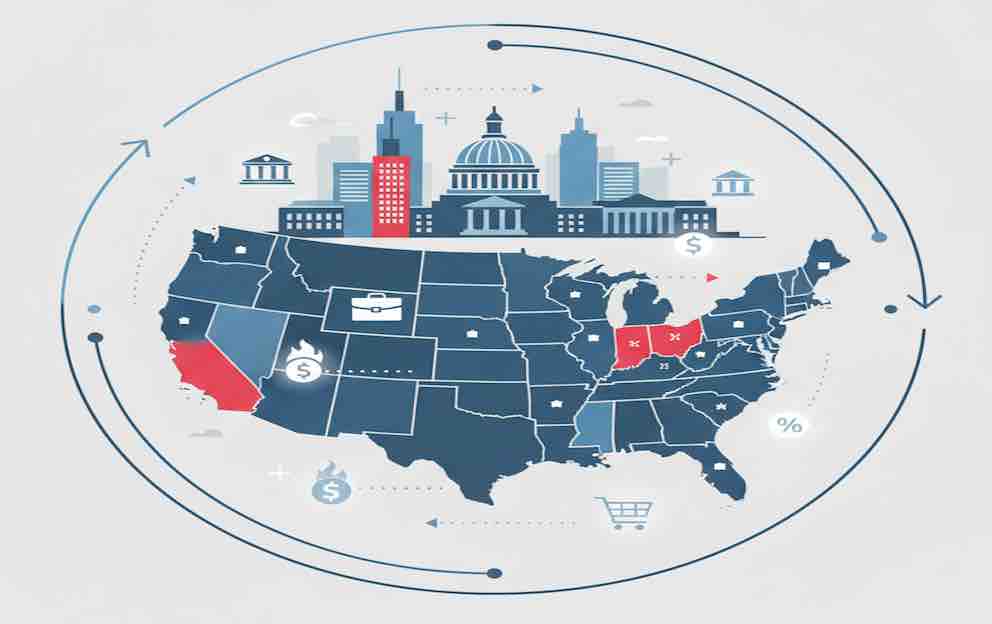
This week's economic snapshot shows a fragile recovery in consumer sentiment after November's government shutdown, though underlying caution remains. The RealClearMarkets/TIPP Economic Optimism Index jumped 9.1% to 47.9 in December - still below the neutral 50 threshold for the fourth straight month. Meanwhile, the University of Michigan's Consumer Sentiment Index was at at 51.0, reflecting ongoing household worries. On the growth front, revised forecasts now anticipate 2.1% real GDP growth for the next year with inflation at 2.75%, while employment data revealed 11 states experiencing job losses - up from just three last quarter. Productivity gains from AI adoption are partially offsetting labor market softness, but the Conference Board's Leading Economic Index continues its downward trend, signaling potential headwinds ahead.
Key Macroeconomic Data Released This Week
Federal Reserve & Interest Rates
Though no Fed meetings occurred this week, economists' consensus now anticipates two interest rate cuts in 2026 following recent inflation moderation. The Mercatus Center's analysis projects the 10-year Treasury yield will settle between 4.0-4.2% as the Fed balances growth concerns with persistent price pressures. There is growing confidence that inflation will continue trending toward the Fed's 2% target, though recent gasoline and food price increases keep policymakers cautious. For investors, this means borrowing costs should gradually decline through 2026, potentially supporting both consumer spending and business investment.
Employment Trends
Growth Indicators & Outlook
The delayed Q3 GDP report (now scheduled for December 23 due to the government shutdown) remains investors' biggest data gap.
Current estimates from the Philadelphia Fed, Wall Street Journal, and Wells Fargo Economics cluster around 3% growth for the quarter, supported by strong manufacturing output. However, the Conference Board's Leading Economic Index declined 0.5% in August - its sixth consecutive monthly drop - suggesting momentum may be fading. Their analysis attributes this slowdown primarily to 'higher tariffs, which already trimmed growth in H1 2025 and will continue to be a drag.' The Mercatus Center maintains its 2% real GDP growth forecast for the next 12 months, noting that 'productivity gains from growing AI activity will help offset slow growth in employment.'
Despite the Conference Board’s downbeat Leading Economic Index, most recent nowcasts from the Philadelphia Fed, Wall Street Journal survey, and Wells Fargo continue to point to solid positive growth for Q3, underpinned by resilient manufacturing activity.
Outlook for Next Week
Disclaimer
This content was created with formatting and assistance from AI-powered generative tools. While we strive for accuracy, this content may contain errors or omissions and should be independently verified. The final editorial review and oversight were conducted by humans.